
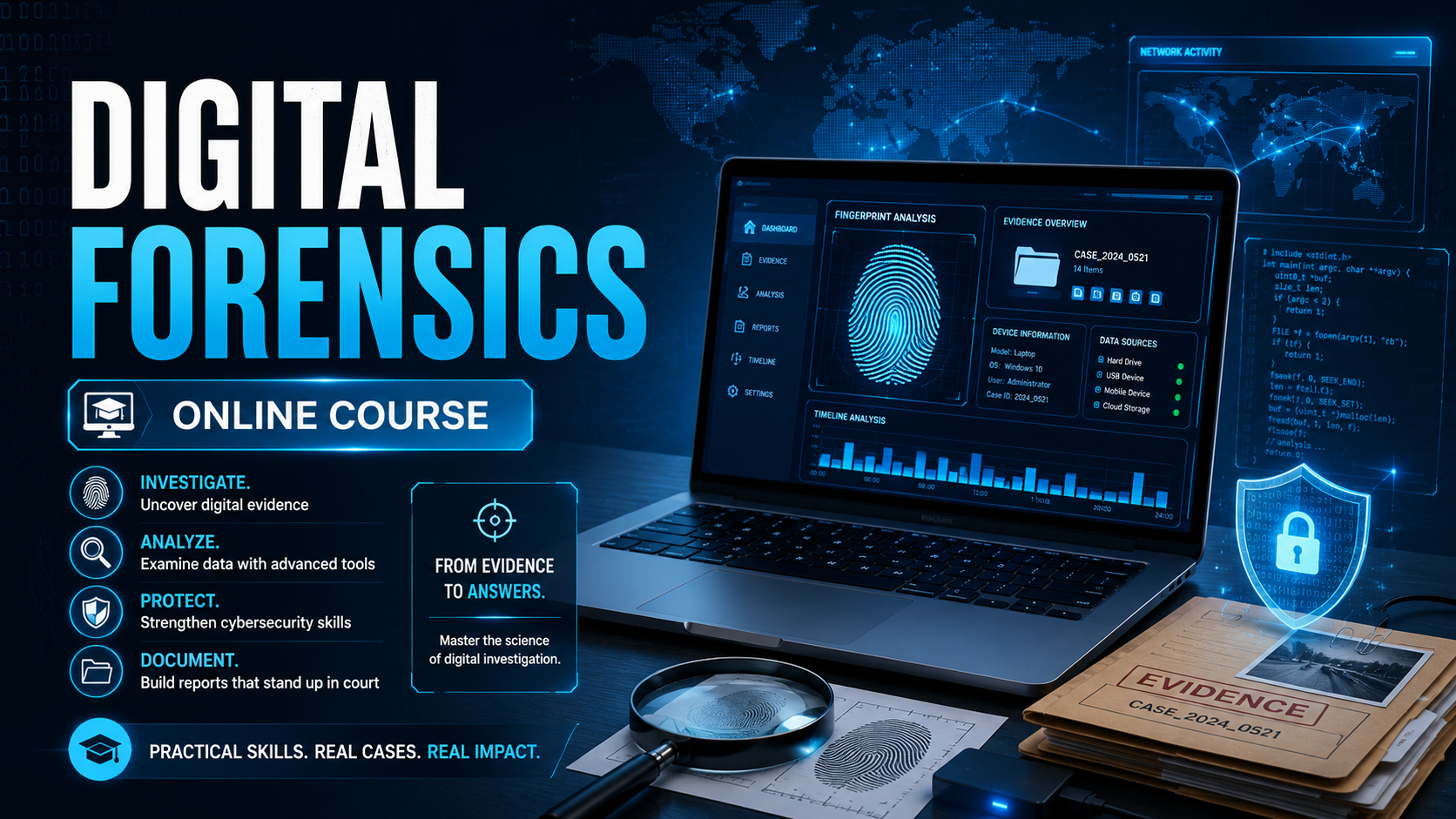
Digital Forensics
Learn the fundamentals of digital forensics, including digital evidence identification, preservation, forensic examination, file and metadata analysis, computer and mobile forensics, network evidence, chain of custody, and forensic reporting.
About this course
Digital Forensics is a practical introductory course designed to provide learners with an understanding of how digital evidence is identified, preserved, collected, examined, analyzed, and documented.
The course introduces the principles and procedures used in digital forensic investigations involving computers, storage devices, mobile devices, networks, emails, browser activity, system logs, files, metadata, and other digital information.
Learners will explore the complete digital forensic investigation process, including evidence identification, preservation, collection, examination, analysis, documentation, and reporting.
Topics include digital evidence and chain of custody, forensic imaging, hash verification, file systems, storage devices, deleted-data concepts, metadata analysis, operating system artifacts, browser and email forensics, network logs, mobile device evidence, forensic software, investigation documentation, and digital forensic reporting.
By the end of the course, learners should be able to identify common sources of digital evidence, understand proper evidence-handling procedures, maintain a basic chain-of-custody record, examine files and digital artifacts, interpret basic forensic information, develop an activity timeline, and prepare a structured digital forensic investigation report.
The course includes practical exercises, module quizzes, a final assessment, and a simulated digital forensic investigation.
All activities are intended for authorized systems, training datasets, laboratory evidence, and devices or information that learners have permission to examine.
Target learners include IT and Computer Science students, cybersecurity students, IT personnel, researchers, security personnel, government and NGO personnel, and beginners interested in digital investigation and cybersecurity.
Successful learners who complete the required lessons, quizzes, practical activities, and final assessment may receive a Certificate of Completion in Digital Forensics.
What you will learn
Learn concepts that can be applied to research, sustainability, livelihood, and community projects.
Follow organized lessons and complete your learning progress online.
Complete the course requirements and earn a digital certificate after completion.